Texas hold 'em (also known as hold'em or holdem) is another version of the standard card game of poker. A dealer shuffles the cards then deals 2 cards to each player and then five community cards are placed by the dealer—a series of three ('the flop') then two additional single cards ('the turn' and 'the river'). Players have the option to check, bet or fold after each deal, i.e. betting may occur prior to the flop, 'on the flop,' 'on the turn,' and 'on the river.'
Most Texas Hold 'Em Poker games start with the two players to the left of the dealer (the button) putting a predetermined amount of money into the pot before any cards are dealt, ensuring that there's something to play for on every hand. When playing Texas Holdem poker, every player is dealt two cards face down – these are called your 'hole cards'. Then there is a round of betting where you can Check, Bet or Fold. This stage of the game is known as pre-flop and what you should do is dependent on those hole cards, or starting hand. Texas Hold’em Rules – an Idiot’s guide By Thomas Nielsen — on April 7th, @ 13:11 PST Every player is dealt two cards, known as ‘hole cards’ and each player then decides whether to bet or fold their hand, depending on whether they think they will win the hand. The dealer then draws three cards and puts them face-up on the table.
Texas hold 'em players compete either for an amount of money or chips contributed by the players themselves (this is called the pot). Because the cards are dealt randomly and outside the control of the players, each player attempts to control the amount of money in the pot based on the hand he or she is holding.
The game is made up of a series of hands or deals. At the conclusion of each hand, the pot is usually awarded to one player (although it can on occasions be split). A hand may end at the showdown, in which case the players that are still in play, compare their hands and the highest hand is naturally awarded the pot. Another possible outcome of a hand is when all but one player have folded and given up any claim to the pot, in which case the pot is awarded to the player who has not folded and is therefore still in play
When a Texas Hold'em Poker player wants to play poker, the general objective is not to win every individual hand, but rather to make mathematically and psychologically correct decisions regarding at what point and how much to bet, raise, call or fold. By skilfully making such decisions, successful Texas Hold'em Poker players maximize winnings in the long term.
Table Of Contents
What is Short Deck Poker?
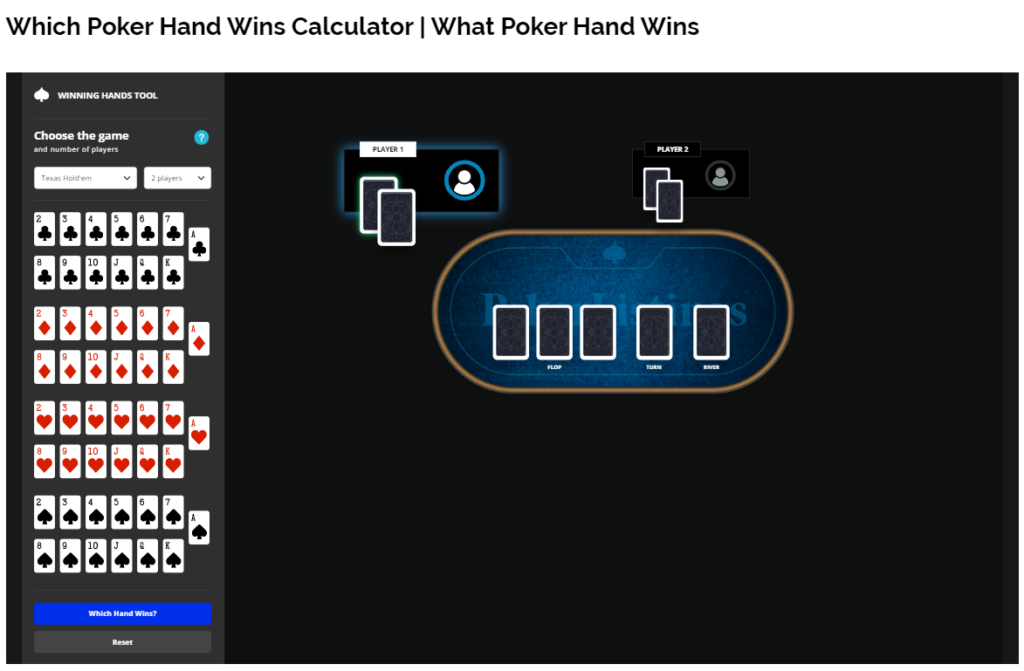
Short-deck poker (also known as six-plus hold'em) is a new variation of traditional Texas hold'em that mostly follows the same rules albeit with a significant difference.
Short-deck poker uses a smaller 36-card deck rather than the full 52-card deck.
Most first heard of short-deck poker after it was introduced among the mix in the high-stakes cash games in Macau.
Play Short-Deck Poker Online6+ Short-deck poker is available online on the following websites:
'>Short-Deck Poker Rules
Before we discover how to play short-deck poker, let's see how to get to the 36-card deck needed to play a game of 6+ hold'em.
The 36-card deck in use in poker short deck is created by removing the 2xs, 3xs, 4xs, and 5xs from the deck (16 cards).
That leaves the 6xs up through the Kxs as well as the Axs.
What about the Aces?
As in regular hold'em, in short-deck poker the aces still count as high or low when making straights.
The lowest possible straight in a game of short-deck poker is Ax9x8x7x6x (think of the ace as essentially replacing the missing 5x).
Poker short-deck is played similarly to regular hold'em.
Each player receive two hole cards and use them in combination with five community cards to create the best possible hand.
A game of short-deck poker features four streets of betting:
- Pre-flop
- Flop
- Turn
- River
However, there are some differences in the poker short-deck poker that you should know about before playing.

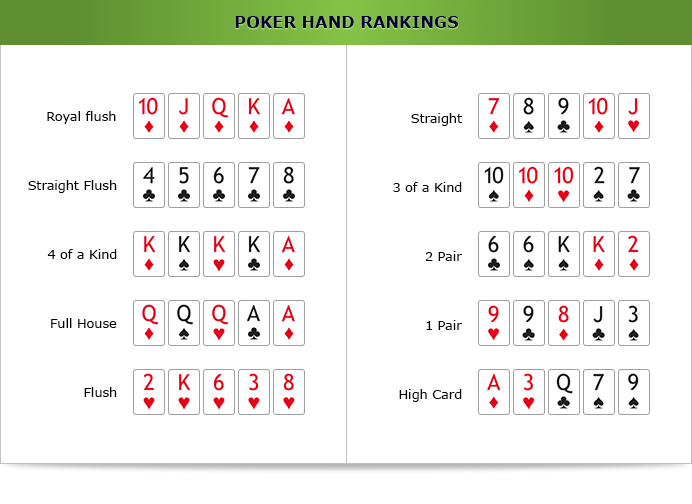
Short-Deck Poker Hand Rankings
Short-deck poker can be played according to the exact same rules as regular Texas Hold'em.
Texas Holdem Poker Rules Hands
The betting can be fixed-limit or no-limit (although most often the game is played no-limit), and the same hand rankings can be used as follows:
| Hand Ranking | Hand Name | Poker Hand |
|---|---|---|
| Lowest | High card | Kx6x9x8xQx |
| One pair | K♦K♠5x8xQx | |
| Two pair | K♦K♠6♥6♦Qx | |
| Three-of-a-kind | K♦K♠K♥6♦Qx | |
| Straight | A♠6♣7♥8♥9♦ | |
| Flush | K♦J♦10♦6♦9x | |
| Full house | K♦K♠K♥6♦6♠ | |
| Four-of-a-kind | K♦K♠K♥K♦6x | |
| Straight flush | 6♦7♦8♦9♦ | |
| Highest | Royal flush | 10♦J♦Q♦K♦A♦ |
For more info about the hand rankings in poker and which hand wins, visit our guide to poker hands.
Alternative Short-Deck Hand Rankings
Short-deck poker is played often employing a different hand ranking system. Here are the alternate hand rankings for short-deck poker (note the differences in bold):
| Hand Ranking | Hand Name | Poker Hand |
|---|---|---|
| Lowest | High card | Kx6x9x8xQx |
| One pair | K♦K♠5x8xQx | |
| Two pair | K♦K♠6♥6♦Qx | |
| Straight | A♠6♣7♥8♥9♦ | |
| Three of a kind | K♦K♠K♥6♦Qx | |
| Full house | K♦K♠K♥6♦6♠ | |
| Flush | K♦J♦10♦6♦9x | |
| Four of a kind | K♦K♠K♥K♦6x | |
| Straight flush | 6♦7♦8♦9♦ | |
| Highest | Royal flush | 10♦J♦Q♦K♦A♦ |
As you can see, following these alternate poker short deck hand rankings a three-of-a-kind beats a straight (instead of vice-versa), and a flush beats a full house (instead of vice-versa).
Why a Different Hand Rankings?
These changes were introduced the because the removal of cards from the standard deck alter the probabilities of making certain hands.
For example, with only nine suited cards (instead of 13), a flush is harder to make in shord-deck poker than in regular hold'em.
Six-Plus Hold'em Variation — The Deal (Fifth Street)
One other popular variation often introduced in six-plus hold'em has to do with the way the river is dealt.
The game can be played according to the same procedure followed in regular hold'em, with the community cards coming in the same way — flop (three cards), turn (one card), and river (one card) — and betting rounds after each street.
More often, though, instead of a river card being dealt to complete a five-card board, players are each dealt a third hole card instead.
Players then make their five-cardpoker hands by using exactly two of their three hole cards and three of the four community cards.
The building of hands resembles the procedure followed in Omaha poker where players must use two of their four hole cards plus three board cards to make a five-card poker hand.
Short-Deck Poker Basic Strategy

As you might imagine, the removal of low cards and use of the 36-card deck makes it more likely to make higher value hands, a change that tends to introduce more action.
You should adjust your thinking about relative hand values from what they are used to in regular hold'em.
The smaller deck makes it easier to make two-pair hands, which means a hand like top pair-top kicker is no longer as strong in six-plus hold'em as it is in regular hold'em.
Straights and full houses are also easier to make in six-plus hold'em than in the regular version of the game (a reason for the alternate hand rankings).
The odds of hitting certain draws change, too, in short-deck pokr.
Just to highlight one example, filling an open-ended straight draw becomes more likely in poker short-deck.
While you're still looking for the same eight outs there are fewer total cards in the deck, thus increasing the percentage you'll make your straight.
The smaller deck also affects the likelihood of being dealt certain hands. [∫]You're more than twice as likely to get pocket aces[/B] in short-deck poker than you are in regular hold'em!
Finally, players being dealt a third hole card instead of there being a fifth community card obviously affects hand values as well, making it even more likely that players improve their hands — yet another factor that has to be taken into account when calculating odds and considering your final-round betting strategy.
Official Texas Holdem Poker Rules
Conclusion
Short-deck poker / 6+ hold'em introduces several exciting twists to traditional Texas hold'em, creating an action-filled alternative that many players are finding especially enjoyable to play.
The changes from regular hold'em aren't terribly complicated, making it easy to new players to learn and play right away.
Short-Deck Poker FAQ
A game of short-deck poker follows the same rules and gameplay as Texas hold'em poker.
The players receive two hole cards and they need to combine them with five community cards to create the best possible five-card hand.
Short-deck poker, however:
- Uses a 36-card deck rather than the full 52-card deck
- Ranks the hands differently compared to Texas hold'em
All the details to know before playing a game of short-deck poker are in this article.
The game of short-deck poker, os six-plus hold'em became famous at the high-stakes games in Macau. Due to the smaller deck, the game makes it more probably for players to hit high-value combinations.
You can play short-deck poker live at most poker festivals. If you are looking for games of short-deck poker online, check out the pokes sites listed on this page.
The removal of some low-value cards from the deck changes the game's basic strategy and the value of different poker hands.
To understand ranges and odds in short-deck poker, have a look at this article.
Must Have Rooms
Home to the biggest tournaments online, these rooms also have the largest player base, great bonuses, tons of action and the best software. If you don't have accounts here, you are missing out on the best that online poker has to offer.
PartyPokerplatinum
Poker Texas Holdem Hands
Up to $30 of Free Play
RATING
9.9 ★
Key features
- Excellent mobile poker games
- Lots of free and real-money action
- One of the most trusted brands in online gaming